Saturday, January 31, 2015

My Video #NoLatinoOscars


#OscarsSoWhite is Business as Usual
A couple days ago I posted on #OscarsSoWhite, although questions continued to nag me about how apologists for the Oscars continue to normalize rhetoric that erases the accomplishments of people of color. So I composed a video that answers some questions and provokes others.


I look at some of the statistics in my book Reclaiming Poch@ Pop regarding the representation of Latinos in the media, and it's unfortunate that this year's "so white" Oscars is indicative of standard practices in video games, news, and film.


Thursday, January 29, 2015

#AllWhiteOscars is 'Business as Usual'

Exoticized "Others" the Exception, Not Rule at Academy Awards

There has been a fair amount of criticism of the Academy Awards since the release of the nomination, prompting the hashtag #OscarsSoWhite. The argument is particularly strong that the Academy Awards favors white actors and actresses because Selma is nominated for best film, although none of its cast or director is nominated in the corresponding categories. As it stands for Latinos, Mexico-born Alejandro Gonzalez Inarritu seems to be a favorite in the best director category for Birdman, although this could be attributed to the greater acceptance of foreign-born non-Whites (Villanueva argues this as early as his 1993 book Bootstraps).


I am a fan of Inarritu's films Amores Perros and Babel, so I wish the best for his exposure; however, the benchmark for the Academy Awards seems heavily influenced by the voters who are predominantly older, white males. Outside of film, NPR Latino USA notes similar issues with diversity in video games:


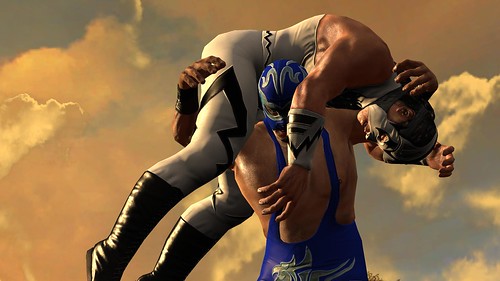
"According to a study published in the journal “New Media and Society” in 2009, only 3% of all video games characters can be identified as Latino. And of that 3%, only 5% are characters you can use to play."


(Lucha Libre from blogs.mercurynews.com)

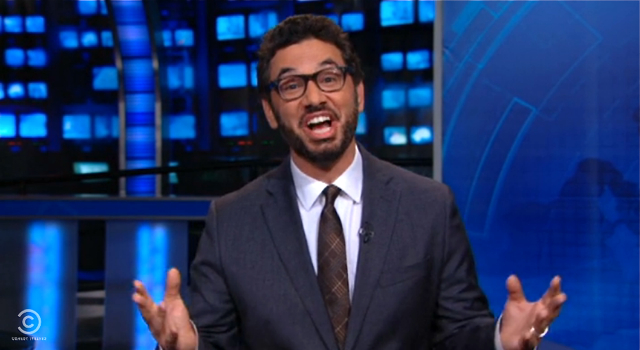
Comparisons have been drawn between the staff at Fox News and the Oscar nominations, which follows in line with what I address in Reclaiming Poch@ Pop as I discuss Al Madrigal's appearance on the Daily Show and his meta-criticism of the Daily Show's hiring practices. 
The Shockingly Low Statistics in Print and Television News Media
Madrigal tongue-in-cheek explains:


"[President Obama]’s had his whole term to do something about immigration and he’s just bringing it up now. I mean that would be like, I don’t know, having your own show for twelve years, hiring every race and religion and creed of correspondent under the sun—Indians, Brits, Blacks, two Canadians—then when the demographic numbers become completely unavoidable, you hope to make up for it by googling ‘Mexican comedian’ and voila."


(Daily Show with Jon Stewart)

In Hector Amaya's "Citizenship, Diversity and Ugly Betty," he draws on data from numerous studies that found Latinos accounted for at most 4% of English-language print news personnel.


"In journalism, Latinos account for 4 percent of personnel in print news, and 6 percent of news staffers in English-language television (NAHJ, 2007). Bob Papper (2003: 21) has found that Latinos account for only 1.5 percent of radio newsstaffers and, in television, for only 4.4 percent of news directors. The lack of Latino personnel in news has a predictable effect on coverage. Federico Subervi’s latest report on Latino representation in television news media shows that stories about Latinas/os account for only 0.82 percent in the major television networks and CNN (2005: 4) (Amaya 2010, p. 806)

As with the Oscars, apologists are quick to defenders are quick to dismiss allegations of discrimination by arguing that there just isn't the supply of Latinos wanting to fill these positions. What films like Selma demonstrate is that there is the presence of such films that deserve to be recognized just as there are actors and journalists who want to fill positions, but those in positions to hire fail in efforts of inclusivity and representing the percentages of the national demographic.

See the Daily Show clip below:

Saturday, January 10, 2015

Ethnic Studies Solidarity Summit at Mission HS in SF

Celebrating Ethnic Studies in San Francisco, California Before Tucson MAS goes on trial.

Today I went to the Ethnic Studies Solidarity Event/Summit at Mission High School in San Francisco, organized alongside Tucson High School's former Mexican American Studies program going on trial Monday (Huff Post story). Below are from the notes I took from the different panel participants from Tucson, So Cal, Nor Cal and Bay Area.

From Tucson, former TUSD MAS teacher Curtis Acosta was on a panel with Ricahrd Martinez, the lawyer for the former MAS teachers and students.

(Richard Martinez, MAS attorney)

Martinez made the points that MAS was a product of many scholars & history--transformative process, turning students into scholars--flipping switches on hearts & minds.
He used the poem/framework of Luis Valdez's poem "In Lak'ech" to the counter notion of 'promoting resentment against a
race or class' as alleged in HB 2281.


(Acosta, former student & MAS lawyer Martinez)

Acosta teacher perspective: call ourselves Ethnic Studies because law can be used as precedent on all of us; common humanity present in all schools--HB 2281 made students loving themselves illegal, as well as their history and culture.

 And then Allison T Cubalis introduced the Bay Area panel. She began saying that "Ethnic Studies saved my life." A Chicano Studies changed her life during college--along with the Third World Liberation front--she realized she was Filipino and part of something powerful and beautiful. She introduced Roger Alvarado and Daniel Gonzalez.


(Allison Cuablis)

Gonzalez gave a Bay area history of labor strikes in the 30s during the Depression. The Longshoreman made an agreement with Black laborers and brought them into union because they didn't cross strike, which closed city for a couple days. 
(Serna as Che Castro)

Academia de Cruz blog contributor Elias Serna was present with his Xikano Pop up books and performed as a part of the Chicano Secret Service, along with Tomas Carrasco.


(Xikano Pop Up!)

 The Southern California panel included a doctoral candidate at Columbia named Cati de los Rios who did work in Pomona, Ca  with day laborers, an adjunct professor named Susie at Occidental College, who worked with her husband in South Central to pass an Ethnic Studies requirement. For a complete description, see ethnicstudiesnow.com .
They showed this video:

Streaming on Aztlan TVhttp://m.ustream.tv/channel/aztlantv
 In addition a documentary was being filmed at the summit about Dolores Huerta because the attack on the TUSD MAS program came following her questioning of conservative attacks on Latinos in Arizona.
(Me and Serna)

From the Ethnic Studies Summit on Facebook
"ETHNIC STUDIES NOW!!! Summit & Teach-In.

Please join students, teachers, and advocates from Tucson, Texas, the Bay Area, and Southern California. 

Following a hard-fought victory to bring Ethnic Studies courses to High Schools across SFUSD and LAUSD, and two days before the 9th U.S. Circuit Court of Appeals will hear oral arguments in a lawsuit against Arizona officials who eliminated the Mexican-American Studies curriculum from public schools in Tucson.

Event: The summit will be a vital moment to discuss past and future efforts for solidarity in the struggle for Ethnic Studies with teachers and community organizers from California, and Arizona; it will be an opportunity to hear student voices and connect to historical and contemporary Ethnic Studies movements, and; it is an occasion to learn more about events planned for the day of the 9th U.S. Circuit Court of Appeals.

Build solidarity and raise awareness for Ethnic Studies and Mexican American Studies regionally and nationally!!"

Tuesday, December 16, 2014

Preview on Google Books

Reclaiming Poch@ Pop on Google Books

The hardback copies are due out in a couple weeks, but the preview is live on Google Books. The embed function doesn't work very well here, so I'm posting a pic I posted to Instagram from the Google Books site.


Direct Google Books link: https://books.google.com/books?id=RpjOBQAAQBAJ&lpg=PT27&dq=poch%40%20pop&pg=PT27#v=onepage&q=poch@%20pop&f=false

Or get it at Amazon!

(Back Cover with Reviews, Synopsis & Author Bio)

Thursday, December 4, 2014

My Flier for 4C 2015 in Tampa, FL

'Cruz Medina to Speak at National Conference'

It'll be hard to beat last year's conference where I spoke at a featured session, got a picture with Angela Davis, and had a great conversation about a book idea. But I'm sure going to try. It might very well appear that I'm over-committed to speak at this #4C15, but I'm really looking forward to all of these sessions, especially the panel below where I will be presenting alongside a couple mentors of mine Drs. Cristina Kirklighter and Octavio Pimentel. I will be presenting on my book Reclaiming Poch@ Pop: Examining the Rhetoric of Cultural Deficiency.


And you can't attend a conference without volunteering a bit of service to the national convention, especially because I really enjoy chairing panels. All the pressure is off me as presenter, and I get to ask questions to get the Q&A portion going.
 Lastly, one of my absolute favorite parts of NCTE/CCCC that I am the most excited about is the NCTE/CCCC Latina/o Caucus workshop, where new and seasoned scholars get together to talk about their work and engage with a local community organization.


Highlights from #4C14
 (Angela Davis and I)

 (NCTE/CCCC Latina/o Caucus)

(From my featured panel with Natasha Jones and Octavio Pimentel)

Monday, December 1, 2014

Robert Rodriguez and State of Latino Filmmaking

Ohio State Professor Frederick Aldama Points to Mexico and B-movie Genre

UPDATE:
Below, I took the "Aldama Challenge" after my copy came in the mail. I found Charles Ramirez Berg's Foreword funny when he says that "Robert had smuggled a Latino protagonist into a popular genre" (x). Aldama makes an interesting point about Rodriguez's relationship with technology: "as the technology progressed, so too did Rodriguez...he learned how to use a Steadycam...he taught himself HD film techniques...he honed his CGI, animatic, and green screen skills" (Aldama 4). Similarly, his writing of films scores shows how scoring is "a crucial shaping  ingredient that should not be left as an afterthought" (12).


In the last chapter, Aldama interviews Rodriguez, which is when Rodriguez discusses the issue of Latinos in Hollywood, or the lack thereof: "The problem I had when I went to Hollywood was that there were no Latins working in Hollywood. It's a very reactive business. It's not really innovative...This just shows that we not only need to pressure Hollywood to write more Latin characters, but we need more Latin filmmakers who can go in and make that argument and create in their own image so that it's authentic, and yet universal" (Aldama 141).


Aldama talks Robert Rodriguez in his new book The Cinema of Robert Rodriguezwith VOXXI. Benson points out the strength of the Latino audience: "As for the future of Latino filmmaking, Aldama said he expects the market to expand in all avenues in the near future once Hollywood realizes Hispanics, as the majority minority, has $1.3 trillion in buying power."


I've posted on Aldama's book on Latino Comics prior. This weekend, Aldama will be leading some panels at the Latino Comics Expo.

See Aldama's new book on Rodriguez here:


Sunday, November 30, 2014

Guest Speaking via Skype at University of Central Florida

Spoke with Dr. Gabriela Raquel Rios' Cultural Rhetorics Seminar

I am really grateful that Dr. Rios at the University of Central Florida invited me and Aja Martinez to speak about our research related to Tucson, SB 1070 and HB 2281. I began by discussing the concept of subversive complicity which is something that surfaced throughout the article as what the students used to navigate Tucson schools. At the same time, I found myself working within the grant in a similar manner that supported the publication of the book Nuestros Refranes, for which I published the article "Nuestros Refranes: Culturally Relevant Writing in Tucson High Schools."

(screenshot of Dr. Rio's seminar)

Dr. Rios makes a great argument about multimodal compositions not needing to be at the service of the written text, which is what happened with the use of dichos and trying to engage students with culturally relevant curriculum--the text had to ostensibly be for the service of the publication because the grant needed tangible outcomes.

This work came out of a year long GEAR UP grant—even these kinds of grants that are extremely necessary tend to be marginalized when it comes to  grad work—hard to show on lists of classes taught on CV when schools want to see you’ve taught an array of classes; in rhetorical theory, the influence of power is fairly prevalent to where I hear and think it’s somewhat fitting that rhetoric can be defined as “the available means of persuasion in a given context and the movement of power through discourse.“


How those in power portray the marginalized population—how colonial narratives—or as CRT defines them—majoritarian stories—have an impact on how education funds, policy written, and allotments budgeted. Aja's article "Critical Race Theory Counterstory as Allegory: A Rhetorical Trope to Raise Awareness About Arizona's Ban on Ethnic Studies" speaks specifically to the majoritarian stories that are told in Arizona and other spaces that uphold narratives about people of color that portray them as lacking.

I also added that my book Reclaiming Poch@ Pop: Examing the Rhetoric of CulturalDeficiency came from kernels of what I talk about with regard to pop culture and the pop culture artists like Lalo Alcaraz who identify as pocho or pocha—came from struggles in Arizona that would either short-shrift or completely misrepresented in local and national news.

.